

Serengeti National Park: Tanzania’s Timeless Wilderness
Serengeti National Park is one of the world’s most celebrated wildlife destinations, renowned for its vast open plains, exceptional biodiversity, and the awe-inspiring Great Migration. Located in northern Tanzania, the Serengeti represents the very essence of African safari experiences and remains a bucket-list destination for travelers, photographers, and nature lovers from across the globe.
Overview of Serengeti National Park
Established in 1951, Serengeti National Park covers approximately 14,750 square kilometers, making it one of the largest protected ecosystems in Africa. The park forms part of the Serengeti–Mara ecosystem, which extends into Kenya’s Maasai Mara National Reserve.
The name “Serengeti” is derived from the Maasai word “Siringet,” meaning “endless plains,” a fitting description of the sweeping grasslands that dominate the landscape. Due to its outstanding natural value, the park was designated a UNESCO World Heritage Site.
Landscape and Ecosystems
The Serengeti is defined by remarkable ecological diversity. Its landscapes include:
-
Vast savannah grasslands
-
Rolling wooded hills
-
Riverine forests along the Grumeti and Mara Rivers
-
Granite kopjes, which serve as vantage points for predators
-
Seasonal and permanent wetlands
This variation in habitat supports an extraordinary range of wildlife and ensures year-round game viewing opportunities.
Wildlife of the Serengeti
Serengeti National Park is home to one of the highest concentrations of large mammals on Earth. Visitors can expect to encounter:
The Big Five
-
Lion
-
Leopard
-
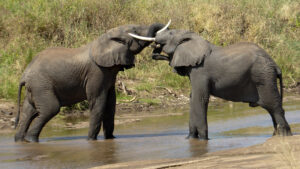
Elephant
-
African buffalo
-
Black rhinoceros (rare but present)
Other Mammals
-
Cheetahs, hyenas, and African wild dogs
-
Giraffes, hippos, crocodiles
-
Grant’s and Thomson’s gazelles
-
Topi, eland, and hartebeest
The park also boasts over 500 bird species, including ostriches, secretary birds, kori bustards, vultures, eagles, and flamingos in seasonal lakes.
The Great Migration
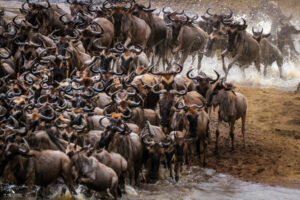
The Serengeti is globally famous for hosting the Great Wildebeest Migration, widely regarded as the greatest wildlife spectacle on Earth. Each year, more than:
-
1.5 million wildebeest
-
300,000 zebras
-
Hundreds of thousands of gazelles
move in a continuous, circular journey in search of fresh grazing and water.
Migration Highlights
-
January – March: Calving season in the southern Serengeti (Ndutu area), attracting predators
-
May – June: Movement toward the western corridor
-
July – September: Dramatic river crossings at the Grumeti and Mara Rivers
-
October – December: Herds return south as rains begin
Unlike many wildlife events, the Great Migration occurs year-round, though the location changes seasonally.
Safari Activities in Serengeti National Park
Visitors to the Serengeti can enjoy a variety of unforgettable experiences:
-
Game drives (morning, afternoon, and full-day)
-
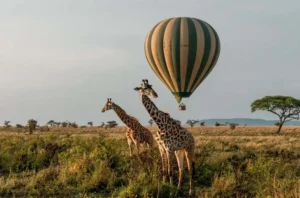
Hot air balloon safaris, offering aerial views of wildlife at sunrise
-
Guided walking safaris (in designated areas)
-
Photography safaris
-
Cultural visits to nearby Maasai communities
Best Time to Visit Serengeti National Park
The Serengeti is a year-round safari destination, but the best time depends on traveler interests:
-
Dry Season (June – October): Best for general wildlife viewing and river crossings. This is also the time for Mara river crossing of the wildebeest and zebras. so you can expect to witness the greatest animal migration in the world.
-
Green Season (November – May): Lush landscapes, fewer crowds, excellent birdlife. This the best time to visit the central serengeti around seronera area.
-
January – March: Ideal for calving season and predator action. During this time of the year, all animals are concentrating in the southern part of the park in the Ndutu area of Ngorongoro conservation area.
Accommodation Options
Serengeti National Park offers a wide range of accommodation to suit all budgets:
-
Luxury lodges: You will be able to book a luxury lodges including Singita Mara River Tented Camp, Olakira Migration Camp, Lemala Ewanjan Tented Camp
-
Tented camps (mobile and permanent). Some of the popular tented camp in serengeti include serengeti wilder camp, thorn tree camp among others.
-
Mid-range safari camps. The mid range camp in serengeti includes Kubu Kubu Tented Lodge, Meliá Serengeti Lodge, Serengeti Sopa Lodge, Serengeti Serena Safari Lodge, and mobile camps like Serengeti Kati Kati Camp
-
Public and special campsites. you can also opt for the public campsite where you will camp at designated places like Seronera public campsite, Pimbi Public Campsite, Nguchiro Public Campsite, Tumbili Public Campsite, and Ngiri Public Campsite
Many lodges are strategically located to follow the migration and maximize wildlife encounters.
Conservation Importance
Serengeti National Park plays a critical role in wildlife conservation and scientific research. It is one of the longest-studied ecosystems in the world and serves as a model for understanding predator–prey relationships and large-scale animal migrations.
Strict conservation policies help protect endangered species and preserve the natural balance of this iconic landscape for future generations.
Why Visit Serengeti National Park?
A visit to Serengeti National Park offers:
-
Unmatched wildlife density
-
One of the world’s most dramatic natural events
-
Diverse landscapes and ecosystems
-
Authentic, classic African safari experiences
Whether you are witnessing a thundering wildebeest migration, tracking lions across golden plains, or floating silently above the savannah in a hot air balloon, the Serengeti promises a truly unforgettable adventure.