
Jozani–Chwaka Bay National Park: Zanzibar’s Natural Treasure
Jozani–Chwaka Bay National Park stands as the ecological heart of Zanzibar and a symbol of the island’s commitment to conservation and sustainable tourism. As Zanzibar’s only national park, it protects one of the last remaining indigenous forest ecosystems on Unguja Island, offering visitors a rare opportunity to experience the island’s natural heritage beyond its world-famous beaches.
Located between the villages of Jozani and Chwaka, the park encompasses a rich and diverse landscape shaped by groundwater forests, wetlands, and mangrove-lined coastal areas. These ecosystems support an exceptional range of plant and animal life, including several endemic and endangered species found nowhere else on Earth. Most notably, the park is the last stronghold of the Zanzibar red colobus monkey, whose survival is closely tied to the protection of this forest.
Jozani–Chwaka Bay National Park is more than a wildlife sanctuary; it is a living classroom where nature, culture, and community intersect. Guided walks through the forest reveal towering trees, medicinal plants, and complex ecological relationships, while nearby mangrove boardwalks highlight the importance of coastal ecosystems to both marine life and local livelihoods. The park’s management actively involves surrounding communities, ensuring that conservation efforts also support education, employment, and sustainable development.
For travelers seeking an authentic, educational, and environmentally responsible experience, Jozani–Chwaka Bay National Park offers a deeper understanding of Zanzibar’s natural identity. A visit here not only provides memorable encounters with wildlife and landscapes, but also contributes directly to preserving the island’s biodiversity for future generations.
Location and Overview
The park lies approximately 35 kilometers southeast of Stone Town, making it an easy half-day excursion from most parts of Zanzibar. Covering about 50 square kilometers, Jozani–Chwaka Bay National Park protects a mosaic of habitats, including groundwater forests, salt marshes, and mangrove forests along Chwaka Bay.
Established to conserve Zanzibar’s remaining indigenous forest, the park plays a critical role in preserving biodiversity on the island.
The Famous Zanzibar Red Colobus Monkey
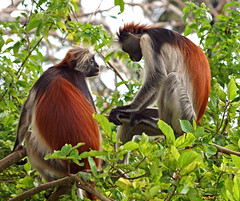
Jozani is best known as the home of the Zanzibar red colobus monkey, an endangered species found nowhere else in the world. These monkeys are easily recognizable by their reddish backs, black faces, and expressive behavior. Unlike many wild primates, red colobus monkeys in Jozani are accustomed to human presence, allowing visitors to observe and photograph them at close range without disturbance.
In addition to red colobus monkeys, the park is also home to:
-
Sykes’ monkeys
-
Small forest antelopes (duikers)
-
Bushbabies
-
Over 40 species of birds
-
Reptiles, amphibians, and a rich variety of butterflies
Forest and Mangrove Ecosystems
The groundwater forest is the ecological heart of Jozani. Towering trees, medicinal plants, and shaded walking trails create a peaceful atmosphere ideal for guided nature walks. Knowledgeable local guides explain traditional plant uses, forest ecology, and ongoing conservation efforts.
At the edge of the park, visitors can explore the mangrove forests of Chwaka Bay via raised wooden boardwalks. Mangroves are essential to coastal protection and marine life, serving as breeding grounds for fish and stabilizing shorelines. Walking through the mangroves offers a fascinating look at how nature and local livelihoods are closely connected.
Things to Do in Jozani–Chwaka Bay National Park
-
Guided forest walks with professional park guides
-
Wildlife observation and photography
-
Mangrove boardwalk tours
-
Educational eco-tours focused on conservation
-
Birdwatching and nature study
A typical visit lasts between 1.5 and 3 hours, making it easy to combine with other Zanzibar attractions.
Best Time to Visit
The park is open year-round, but the best time to visit is in the morning or late afternoon, when temperatures are cooler and wildlife is more active. The dry season from June to October is ideal for walking, though the forest remains beautiful and green throughout the year.
Conservation and Community Impact
Jozani–Chwaka Bay National Park is more than a tourist destination. Entrance fees directly support conservation programs and community development projects in nearby villages. Local residents are actively involved as guides, rangers, and educators, ensuring that tourism benefits both nature and people.
By visiting the park, travelers contribute to the protection of endangered species and the long-term sustainability of Zanzibar’s ecosystems.
Why Visit Jozani–Chwaka Bay National Park?
-
See the rare Zanzibar red colobus monkey in its natural habitat
-
Experience Zanzibar’s last remaining indigenous forest
-
Learn about mangrove ecosystems and conservation
-
Enjoy an easy, family-friendly eco-tour close to major resorts
-
Support responsible tourism and local communities
Conclusion
Jozani–Chwaka Bay National Park is a must-visit destination for nature lovers, eco-tourists, and anyone seeking a deeper connection with Zanzibar’s natural heritage. Whether you are visiting for wildlife, education, or a peaceful walk through the forest, Jozani offers an unforgettable experience that highlights the island’s commitment to conservation and sustainable tourism.